How Many Calories Should I Eat a Day? 2026 BMR Guide
How Many Calories Should I Eat a Day?
How many calories should I eat a day? There is no single number that fits everyone. A tall, active adult needs far more energy than a shorter, less active adult. The good news is that you can estimate your daily needs with two simple ideas: BMR and TDEE. Once you understand them, use our free calorie calculator to get a personal estimate in seconds.

What Is a Calorie?
A calorie is a unit of energy. In food, we usually mean kilocalories, written as kcal. Your body uses this energy for breathing, keeping warm, thinking, walking, and exercising. If you regularly take in more than you use, your body stores the extra energy, mainly as body fat. If you take in less, it draws on stored energy. Food quality matters too: nutrients, fibre, and protein affect your health and how full you feel.
What Is BMR?
BMR stands for basal metabolic rate. It is an estimate of the energy your body would use in a day if you rested all day and did nothing. It covers the basic work of staying alive: breathing, circulation, and keeping your body warm. BMR depends mainly on your weight, height, age, and sex. It is the largest part of most people's daily energy use, but it is not your full daily need, because you also move, work, and exercise.
What Is TDEE?
TDEE stands for total daily energy expenditure. It is your estimated total energy use in a day: BMR plus daily movement, work, household tasks, and exercise. In short, BMR is what you would use at complete rest, and TDEE is what you actually use on a normal day. If you eat about the same as your TDEE, your weight will tend to stay the same. Eat less over time, and it will tend to fall. Eat more, and it will tend to rise.

How Many Calories Should I Eat? The Mifflin-St Jeor Equation
The most widely used way to estimate BMR is the Mifflin-St Jeor equation. It was published by Mifflin and colleagues in 1990 in the American Journal of Clinical Nutrition as a new predictive equation for resting energy expenditure. You can read the original study here: Mifflin et al., 1990, American Journal of Clinical Nutrition.
For men: BMR = 10 x weight in kg + 6.25 x height in cm - 5 x age in years + 5. For women: BMR = 10 x weight in kg + 6.25 x height in cm - 5 x age in years - 161.
Then multiply BMR by an activity factor to estimate TDEE:
- Sedentary, little or no exercise: BMR x 1.2
- Lightly active, light exercise 1 to 3 days a week: BMR x 1.375
- Moderately active, moderate exercise 3 to 5 days a week: BMR x 1.55
- Very active, hard exercise 6 to 7 days a week: BMR x 1.725
- Extra active, very hard exercise and a physical job: BMR x 1.9
Choose your activity level honestly. Many people overestimate how active they are, which gives a TDEE that is too high.
How Many Calories Should I Eat a Day? A Worked Example
Here is a worked example from our calorie calculator. For example, a moderately active adult whose numbers work out to a BMR of 1,409 kcal per day would have a TDEE of about 2,184 kcal per day: 1,409 x 1.55 = 2,184 kcal per day. This is an illustration, not a real person, and no age, weight, or height is claimed for it. Eating around 2,184 kcal per day would tend to maintain that person's weight.
The same BMR gives very different results at other activity levels:
- Sedentary (x 1.2): about 1,691 kcal per day
- Lightly active (x 1.375): about 1,937 kcal per day
- Moderately active (x 1.55): about 2,184 kcal per day
- Very active (x 1.725): about 2,431 kcal per day
- Extra active (x 1.9): about 2,677 kcal per day
The gap between the lowest and highest totals is almost 1,000 kcal per day, from the same body, simply because of activity.

How to Use Your Calorie Number
Enter your age, sex, weight, height, and activity level in our calorie calculator and note your BMR and TDEE. Treat the result as a starting estimate, not an exact measurement, because your true need varies with sleep, stress, and daily movement. To maintain weight, aim around your TDEE. To lose weight, aim a little below it. To gain weight, aim a little above it. Keep the change modest, and watch how your weight and energy change over two to four weeks before you adjust the target.
Our BMI calculator gives a simple weight-for-height check that many people use with their calorie estimate. BMI has limits, because it does not separate muscle from fat, but it adds useful context. To learn more about this site, see our About page.
Common Mistakes When Estimating Calories
One mistake is counting only exercise and forgetting the rest of the day. A one-hour workout is a small part of 24 hours, and walking, standing, and cleaning all add up. Another mistake is underestimating how much you eat, especially snacks, drinks, sauces, and cooking oil. A simple food diary for a week can be revealing. A third mistake is changing the target too often: weight can move by a kilogram or more in a day because of water, so judge progress by the average over a week or two.
Eating Around Your Daily Target
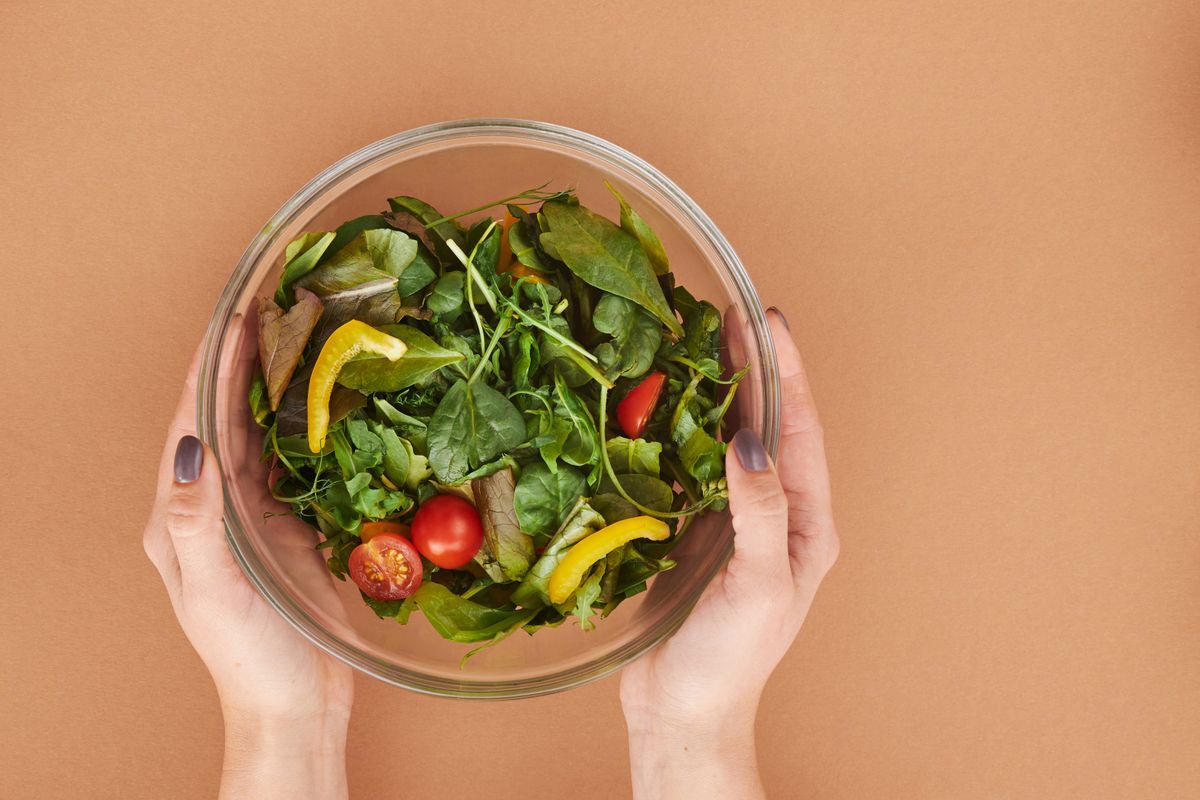
Meals built around vegetables, fruit, whole grains, and protein-rich foods tend to be more filling for the same calories than meals built around fried food, sugary drinks, and refined snacks. Cooking at home helps, because you control the ingredients and the portion size. Regular movement helps too: walking and other daily activity raise your TDEE, so you can eat a little more while keeping the same balance.

The Bottom Line on How Many Calories You Should Eat
So, how many calories should I eat a day? For most adults, the answer is your TDEE: your BMR, estimated with the Mifflin-St Jeor equation, multiplied by an activity factor that matches your real life. In our example, a moderately active adult with a BMR of 1,409 kcal per day has a TDEE of about 2,184 kcal per day. Your number will be different. Use the calorie calculator to find your own, then adjust over a few weeks based on what actually happens. Find all our free tools on the Tier-1 Calculators hub.
These are estimates for general information only. Individual needs vary, and this article is not medical advice. If you have a health condition, are pregnant, or plan a large change to your diet or activity, a healthcare professional can advise you.
Photo credits: Healthy vegan bowl by Alesia Kozik on Pexels; Woman jogging in the park by Miriam Alonso on Pexels; Cooking pot with fresh vegetables by Towfiqu barbhuiya on Pexels; Vegetable salad in a clear glass bowl by Vanessa Loring on Pexels; Two women walking on a coastal path by Kate Trifo on Pexels.


Comments
Post a Comment