How Much House Can I Afford? Mortgage Calculator Guide
How Much House Can I Afford?
How much house can I afford? It is one of the first questions every home buyer asks, and one of the most important. The answer is not the highest price a lender will approve. It is the price that leaves you with a monthly payment you can live with, month after month, without giving up the rest of your life.
This guide shows you a simple way to estimate what you can afford, with a full worked example and a second illustration. When you are ready to run your own numbers, try our free mortgage calculator and test different home prices, down payments, and interest rates.

Start With the Monthly Payment, Not the House Price
Most buyers start by browsing listings and picking a price that looks right. A better starting point is your monthly budget. Ask how much you can comfortably pay each month for housing, after your other bills, savings, and everyday spending. That monthly figure is your real limit, because the bank collects a payment every month, not a house price.
Once you know a comfortable monthly payment, you can work backwards to a home price. Enter a price, a down payment, a rate, and a term in a mortgage calculator, and it estimates the payment for you. Change one input at a time and watch how the payment moves. Also leave room for moving, furniture, repairs, and maintenance.
What Makes Up Your Monthly Mortgage Payment?
Your monthly payment is usually made of four parts, often called PITI: principal, interest, taxes, and insurance.
- Principal: the part that reduces the amount you borrowed. It starts small and grows over time.
- Interest: the cost of borrowing. Early in the loan, interest takes the largest share of your payment.
- Property tax: an annual local tax, usually collected monthly with your mortgage payment.
- Homeowners insurance: cover for damage to your home, also usually collected monthly.
Some buyers also pay private mortgage insurance, or PMI. If your down payment is less than 20 percent of the home price, a lender may ask you to pay PMI until you have built up enough equity. A 20 percent down payment usually avoids PMI.
How Much House Can I Afford? A Worked Example With Our Mortgage Calculator
Here is a full worked example, using the same figures as our mortgage calculator. The inputs are: home price $450,000, down payment $90,000 (20 percent), loan amount $360,000, interest rate 6.4 percent, and loan term 30 years.
The estimated monthly payment is $2,814 in total: principal and interest of $2,252, property tax of $413, and homeowners insurance of $150. PMI is $0, because the 20 percent down payment avoids it.
Look at the long-term figures too. Over 30 years, the total interest is an estimated $450,656, and the total cost is an estimated $810,656. The loan would be paid off in November 2056.
Now ask the key question: could you pay $2,814 every month, comfortably, for many years? If yes, a home at this price may be within reach. If no, or only just, look at a lower price, save a larger down payment, or wait for a lower rate.

A Second Illustration: How a Lower Price Changes the Payment
Here is a second illustration, clearly labelled as an example with different inputs. It uses the standard monthly payment formula for principal and interest, with the loan amount, the monthly interest rate, and the number of monthly payments. The inputs are: home price $375,000, down payment $75,000 (20 percent), loan amount $300,000, interest rate 5.9 percent, and loan term 30 years.
With these inputs, the estimated principal and interest payment is $1,779.41 per month. That is about $473 less per month than the principal and interest in the first example, even though the home price is only $75,000 lower. The smaller loan and the lower rate work together. Add your own estimates for property tax and homeowners insurance to reach a full monthly total.
So test several combinations rather than settling on the first price you see.
Three Simple Steps to Estimate What You Can Afford
Step 1: Find your comfortable monthly payment. Take your income after tax, subtract your regular bills, food, transport, and savings, and leave a realistic amount for fun and emergencies. What is left is a rough guide to what you can spend on housing. A payment that only works if nothing ever goes wrong is not a comfortable payment.
Step 2: Work out your down payment. Check how much you have saved for a deposit, and keep a separate emergency fund untouched. A larger down payment means a smaller loan, a lower monthly payment, and possibly no PMI. But it should not empty your savings completely.
Step 3: Test the numbers. Put your price, down payment, rate, and term into our mortgage calculator and compare the estimated payment with the figure from Step 1. If the estimate is higher, lower the price or raise the down payment and test again.

Common Mistakes When Asking How Much House You Can Afford
First, do not confuse the maximum approval with the right budget. A lender may approve you for more than you should spend, because the lender does not know your other goals. Your own budget is the better guide.
Second, do not forget tax and insurance. Many buyers focus only on principal and interest, then feel caught out when the real payment is several hundred dollars higher. Always look at the full total, including tax, insurance, and PMI where it applies.
Third, do not ignore the long term. A mortgage usually lasts 25 to 30 years, so the total interest matters as much as the monthly payment. If you are also weighing other borrowing, our loan calculator can help you compare monthly payments on a general loan, and our calculators hub brings all of our free calculators together in one place.
Fourth, do not spend every dollar of savings on the deposit. Keep a buffer for moving costs, repairs, and the unexpected. A home with a small safety net is far easier to enjoy than one that leaves you with nothing in reserve.

How Much House Can I Afford? Final Thoughts
So, how much house can I afford? The honest answer is: the home whose full monthly payment, including tax and insurance, fits comfortably in your budget and still leaves room for savings and everyday life. Use the worked example above as a starting point, test your own figures, and let the monthly payment guide your price, not the other way around.
Run your numbers today with our free mortgage calculator, and read more about who we are on our About page. Every figure here is an estimate based on the inputs shown, so confirm the final figures with your lender before you commit.
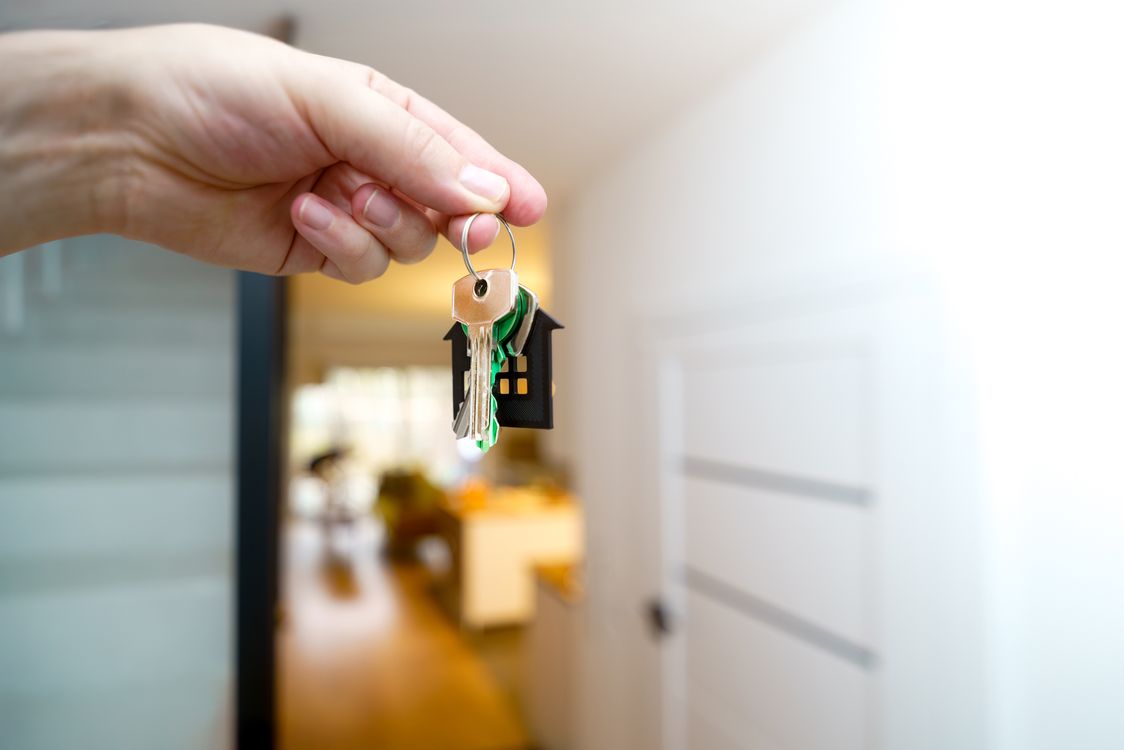
Photo credits: Modern suburban house by Ron Greenberg (Pexels); Hand holding house keys by Jakub Zerdzicki (Pexels); Calculator and real estate flyers by RDNE Stock project (Pexels); Person reviewing financial documents by Mikhail Nilov (Pexels); Smiling couple holding a house-shaped key by RDNE Stock project (Pexels).


Comments
Post a Comment